
Despite being a small island with a population of a mere six million, Singapore has become a burgeoning force to be reckoned with. Global industry leaders and entrepreneurs have established the Lion City as a second home, with its strategic location within the region earning its status of being a ‘global hub’.
This makes it the prime platform for ART SG. Southeast Asia’s landmark art fair returns for its fourth edition at Marina Bay Sands, continuing to serve as a vibrant hub for artists in this region and offering the world a glimpse of its dynamic contemporary art scene. This year’s edition is co-presented with S.E.A. Focus, as both champion the regional landscape and its rising voices.
To some, Singapore is a hallmark of retail and tourism. For many, it is far more—a fertile ground for shaping communities and spaces, capable of inspiring bursts of artistic expression. This is certainly the case for Shen Jiaqi, Hilmi Johandi and Calvin Pang, whose homegrown experiences have shaped their process and practice. Their artworks, presented at ART SG, acts as a direct response to the environment that inspires them.
Below, we spotlight the three local artists on their presenting at the art fair, their creative processes and personal journeys.
@s_jq
1 / 9
Shen Jiaqi
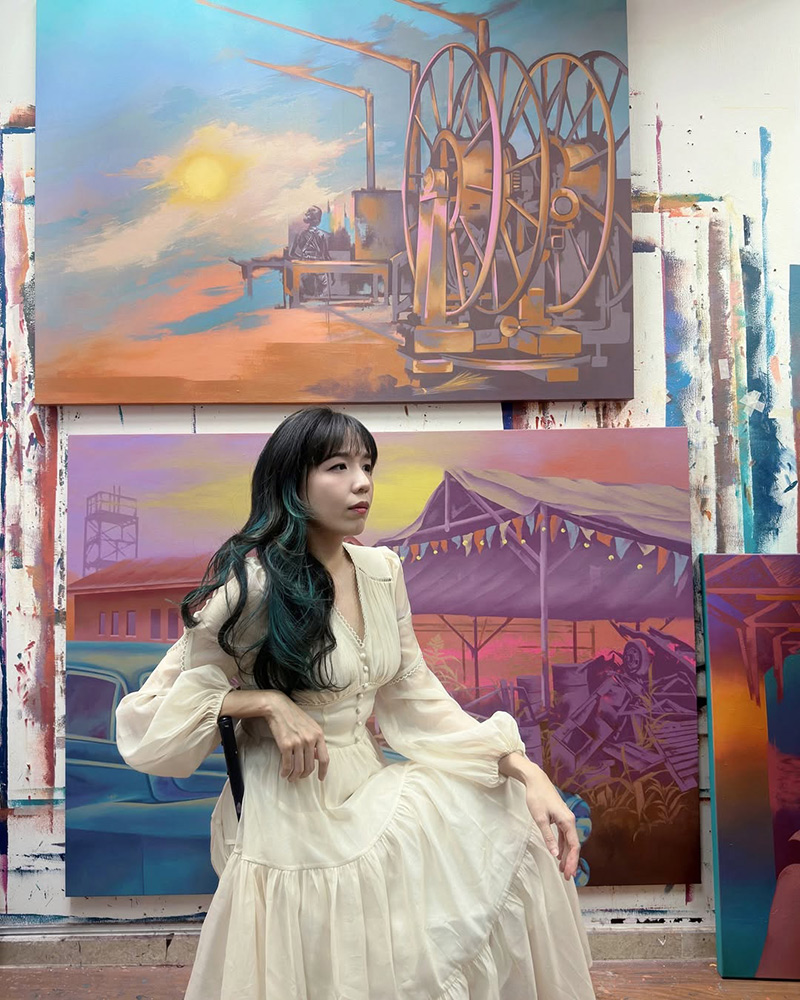
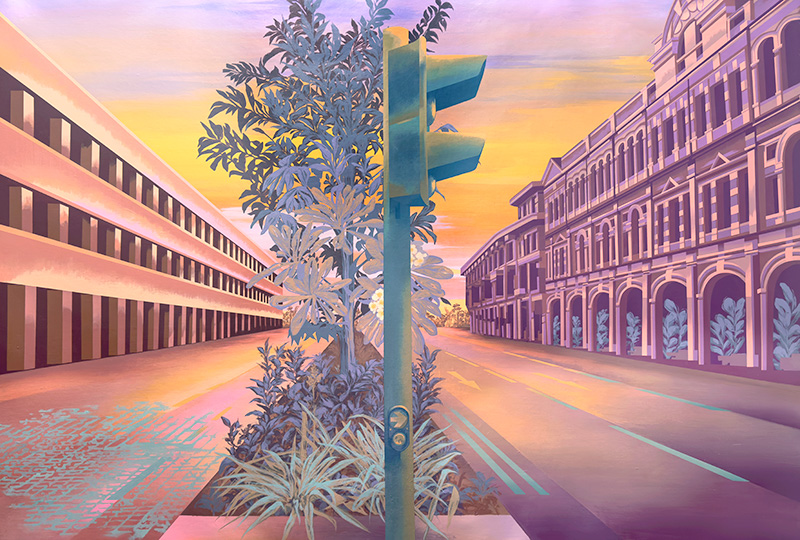
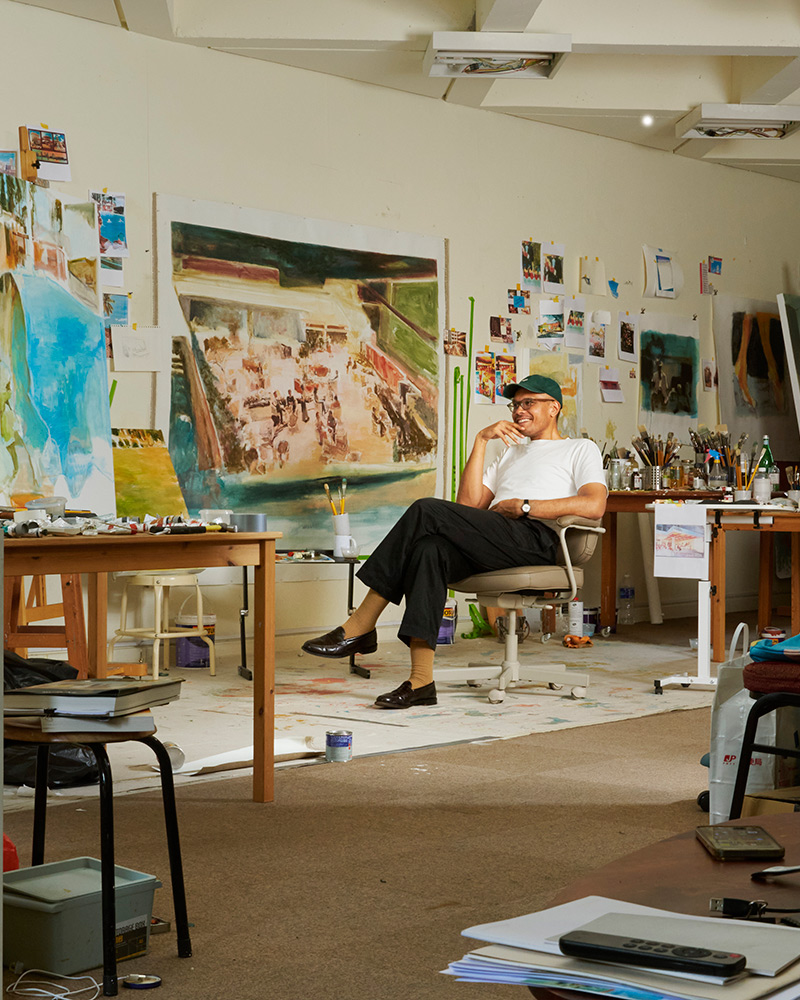
Exploring psychedelic hues and liminal spaces, Shen Jiaqi’s practice offers a fresh perspective on urban landscapes. Her research weaves together Singapore’s historical and visual tapestry, capturing the experiences embedded within. By layering human, machine and nature, her work creates a visual chronicle that blurs memory and reality, reflecting both the city’s evolving landscape and the resilience of its people.
View her works at Cuturi Gallery.
2 / 9
How do you hope your art will impact ART SG and its attendees?
I hope my works can draw attention to Singapore artists and the social realities we respond to, and at the same time open up conversations about how local artistic practices engage with global art discourses, and reflect the conditions of the world today.
Courtesy of Shen Jiaqi
3 / 9
What has inspired your creativity the most in the past year?
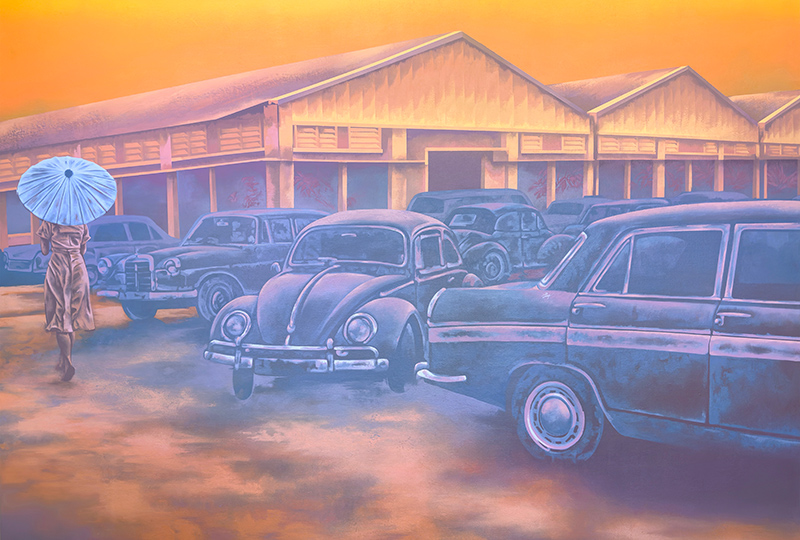
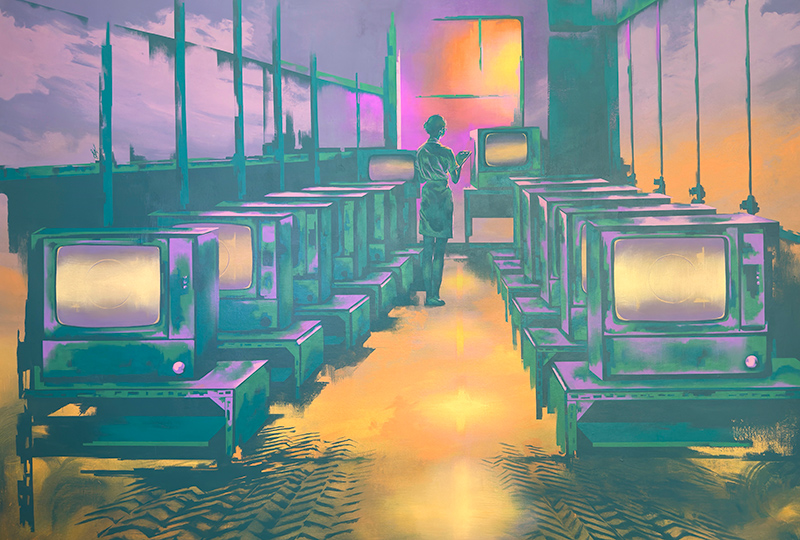
Local social issues have been my main source of inspiration. My works revolved around themes of spaces for creation, the rapid transformation of our environments driven by rental pressures and competing priorities, and how Singapore’s short yet intense history continues to shape the present.
Courtesy of Shen Jiaqi
4 / 9
Your work explores the relationship between enduring elements of human identity and transient urban spaces. How do you envision this relationship will evolve in 2026 and beyond?
I intend to continue working as both observer and narrator of the present. As social and urban conditions continue to accelerate in ways that we can only bear witness to, my work will focus on how individuals relate to environments that are constantly shifting. I will also explore how a sense of identity is formed, carried and sometimes unsettled within these ongoing changes.
5 / 9
Hilmi Johandi
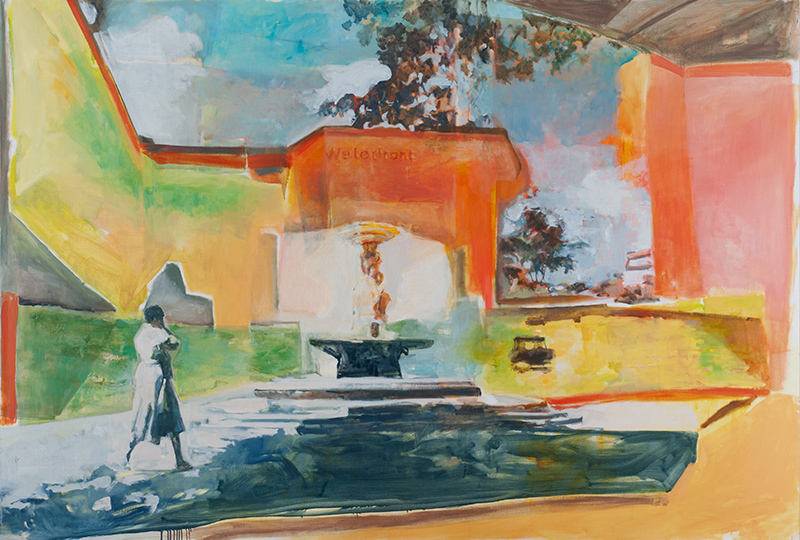
For Hilmi, fragments of the past merge to shape the present. Using paint as his primary medium, he examines the interplay between nostalgia and the viewer through locally resonant symbols. By reworking archival images, he creates compositions that feel both familiar and intriguingly unfamiliar.
His artworks will be on display at Ota Fine Arts.
6 / 9
The world is getting more digital by the minute. As an artist who looks to archival images to comment on past, present and future, how have you navigated these changes in your work?
These days, nostalgia seems to be more immediate, almost tangible. But at the same time, it has also become more apparent that physical and digital methods intertwine in my process. I have been working with the theme of postcards and tourism posters from the ’80s and ’90s in Singapore for some time now. Over the past year, my research has focused on the subjects depicted in these postcards, enabling me to further explore their form and significance. Painting, collage, video and installation form a dialogue between touch and visuals.
7 / 9
Calvin Pang
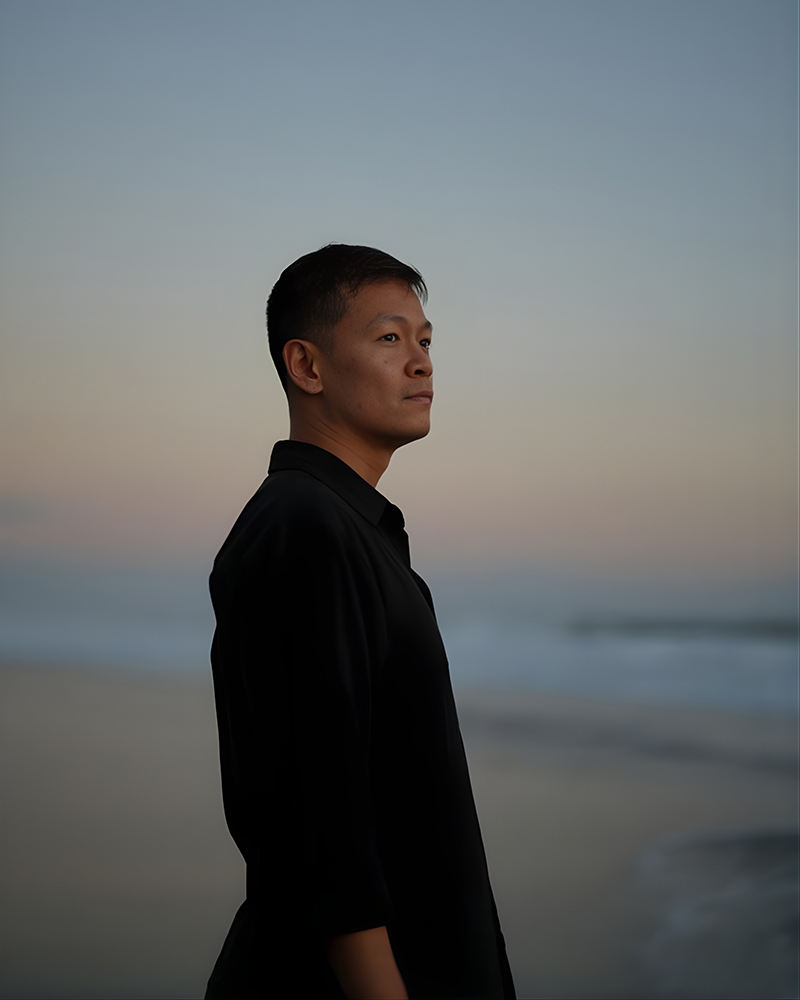
Calvin Pang’s creative process is deeply shaped by his immediate environment, both tangible and intangible. The colour white recurs throughout his work, a signature motif symbolising life (milk) and death (bone). This duality acts as a blank canvas, inviting reflection. He is also a formally trained art therapist.
Though he relocated to Bali in 2024, his work returns to Singapore for ART SG at Intersections Art Gallery.
8 / 9
What has inspired your creativity the most in the past year?
The tangibility of materials and physicality of my immediate environment has consistently been the catalyst for my studio art practice. But since relocating to Bali in 2024, I find myself constantly in unfamiliar circumstances. I started searching for a physical environment where I could find prayerful solace and the sea provided what I did not know I needed to find. On the weekdays, my solitary swim in the Bali Sea becomes exactly that, a rhythmic space where I spend my quiet time with God. It provided me with an environment away from the foreign land, where it is just me and the waters—and God.
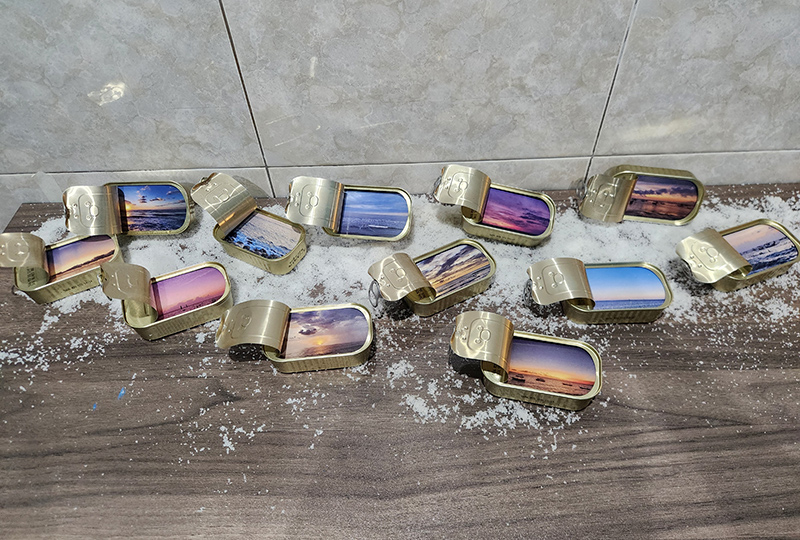
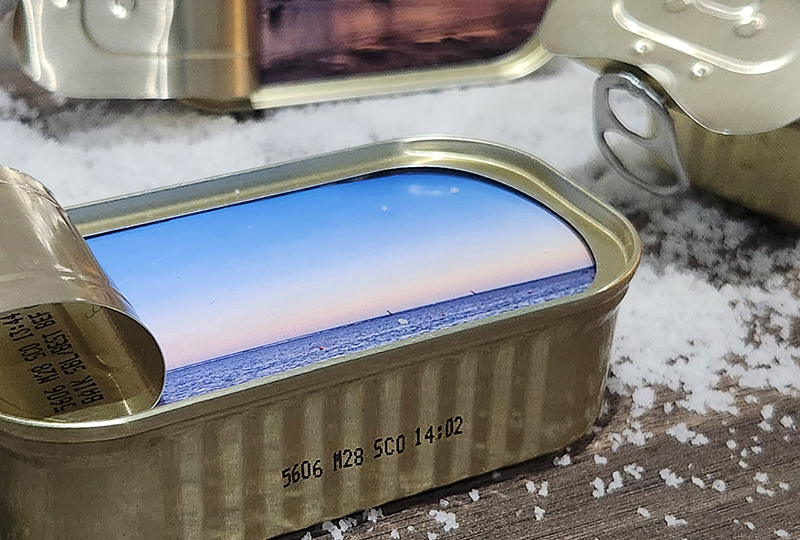
These changes consolidated into my new work, ‘_ Nothing more urgent than slowing down_’, where I presented photographs of sunrise and sunset across different beaches along the coast of Denpasar and the Badung Regency of Bali. The prints, contained within a tin can previously containing fish, speak of my attempts to understand my inner world through the nurturing nature of the waters—where the ocean gives and nourishes.
9 / 9
How has your practice in art therapy informed your approach to your solo work and vice versa?
These are two sides of the same coin. My clinical practice and learning journey as an art therapist help me better understand why I do what I do in my studio art practice. For example, my interest in certain themes and preference for certain materials and ways of art-making. Maintaining a studio art practice, on the other hand, helps me stay close to the roots and tradition of art therapy, which is art-making itself.
Considering the creative process, art-making is also a way of knowing. Often, when I engage with the creative process, I might not yet understand the meaning behind why I do what I do, but being able to stay in the art-making process in an unhurried manner helps the creative process mature at its own pace and allows it to eventually nurture me. Between learning to grow comfortable without clear answers and using my art as a method of asking questions, I believe I can empower others within the boundaries of an art therapy space to do the same.
